Tarps provide cost-effective, region-specific protection against seasonal storage threats such as snow, humidity, UV exposure, wind, and dust. From heavy-duty poly tarps in snowy climates to breathable canvas tarps in humid regions, the right tarp material prevents moisture damage, UV degradation, and structural wear—protecting equipment, vehicles, and inventory year-round.
Tarps solve seasonal storage challenges by protecting assets from region-specific threats like snow load, humidity, UV exposure, high winds, and dust. Choosing the right tarp material, polyethylene, vinyl, or canvas, ensures proper moisture control, durability, and UV resistance, reducing damage, extending asset lifespan, and lowering replacement costs.
Seasonal storage challenges vary dramatically across climates. What works in the Southwest may fail in the Midwest. Businesses and homeowners that align tarp material, GSM weight, weave density, and reinforcement with regional weather patterns experience significantly fewer losses and lower long-term storage costs.
Below are the Top 5 ways tarps address seasonal storage challenges across different regions, along with actionable insights to help you choose the right solution.
1. Heavy-Duty Poly Tarps for Snow & Ice (Northern Regions)

Regional Challenges:
-
Snow accumulation and ice dams
-
Freeze-thaw cycles
-
Water infiltration from melting snow
-
Structural stress from snow load
In states like Minnesota, Michigan, and parts of Canada, winter storage failure often occurs not from snowfall itself, but from meltwater penetration.
How Tarps Solve It:
Heavy-duty polyethylene tarps (10–16 mil thickness) provide:
-
Waterproof barriers against meltwater
-
High tear resistance under snow weight
-
UV stabilization to prevent winter sun brittleness
-
Reinforced grommets for secure tie-downs
Most guides overlook snow load distribution mechanics. A tarp stretched too tightly can create stress points that fail under 20–40 lbs per square foot of snow load. Instead:
-
Use ridge support or center elevation to create a runoff slope
-
Install reinforced edge tarps with rope hems
-
Avoid flat pooling surfaces
Best Applications:
-
Firewood stacks
-
Construction materials
-
Outdoor equipment
-
Temporary roof covers
For maximum winter reliability, businesses should select tarps with a minimum 12×14 weave count and heat-sealed seams.
2. Breathable Canvas Tarps for Humid & Tropical Regions

Regional Challenges:
-
High humidity (70–90%+)
-
Mold and mildew growth
-
Condensation under covers
-
Monsoon or typhoon seasons
In regions like the Southeast U.S., coastal areas, or tropical climates, waterproofing alone is not enough. Trapped moisture becomes the primary threat.
How Tarps Solve It:
Canvas tarps (treated and breathable):
-
Allow airflow to reduce condensation
-
Prevent mold formation
-
Protect wood furniture and machinery
-
Maintain air exchange during storage
Vinyl and poly tarps trap moisture in high-humidity regions. Without ventilation, this creates a microclimate under the tarp. Studies show condensation under non-breathable covers can increase corrosion rates by up to 30% in metal equipment.
Best Practices:
-
Elevate stored items off the ground
-
Use moisture absorbers beneath tarps
-
Allow a slight air gap along the lower edges
-
Choose wax-treated canvas for light water resistance
3. UV-Resistant Tarps for Desert & High-Sun Regions
![12'x20' [Cut Size] 86% Super Shade Mesh Tarps](https://cdn.shopify.com/s/files/1/0641/8350/1044/products/86-mesh-colors_e8947f3d-551d-42c2-b394-d74baa31f016_480x480.jpg?v=1660847259)
Regional Challenges:
-
Intense UV radiation
-
Heat above 100°F
-
Material brittleness
-
Color fading and plastic degradation
States like Arizona, Nevada, and inland California expose materials to extreme ultraviolet radiation that accelerates polymer breakdown.
How Tarps Solve It:
UV-treated poly or vinyl tarps:
-
Include UV inhibitors in the coating
-
Prevent cracking and tearing
-
Reduce heat penetration
-
Maintain tensile strength
Standard blue tarps degrade within 3–6 months in high UV environments. Commercial-grade UV-resistant tarps last 2–5 years, depending on exposure intensity.
Key metrics to evaluate:
-
UV treatment rating (1–5 years)
-
GSM weight (higher GSM = greater durability)
-
Double-stitched hems
-
Reinforced corner patches
Ideal for:
-
Vehicle storage
-
Agricultural equipment
-
Outdoor inventory
-
RV protection
Selecting silver or white tarps can reduce heat absorption by reflecting sunlight, lowering internal temperatures by up to 15%.
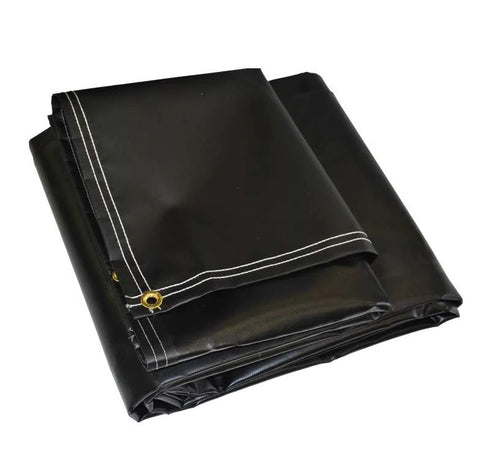
4. Wind-Resistant Vinyl Tarps for Coastal & Storm-Prone Areas
Regional Challenges:
-
High wind speeds (50–100+ mph gusts)
-
Salt air corrosion
-
Tropical storms and hurricanes
-
Flying debris
Coastal regions face tarp failure primarily due to improper anchoring and insufficient tear strength.
How Tarps Solve It:
Heavy-duty vinyl tarps (18–22 oz) provide:
-
Superior tear strength
-
Waterproof sealing
-
Chemical resistance
-
Reinforced webbing edges
Most tarp failures in storms occur at grommet points. To prevent blow-offs:
-
Use ball bungees instead of rope (reduces stress concentration)
-
Anchor at 18–24 inch intervals
-
Use D-ring reinforced tarps for industrial applications
-
Avoid over-tightening (allow flex under gusts)
Vinyl tarps outperform polyethylene in sustained high-wind conditions due to higher tensile strength.
Applications:
-
Boat storage
-
Construction site covers
-
Industrial equipment
-
Temporary wall barriers
5. Dust & Debris Protection in Arid and Agricultural Regions

Regional Challenges:
-
Wind-blown dust
-
Sand abrasion
-
Crop residue
-
Seasonal harvest debris
In dry agricultural regions, dust infiltration causes equipment wear, engine clogging, and surface abrasion.
How Tarps Solve It:
Tightly woven poly or vinyl tarps:
-
Act as dust barriers
-
Prevent abrasion damage
-
Protect mechanical components
-
Shield stored grain and feed
Dust accumulation inside engines and machinery can increase maintenance costs by 15–25% annually. Using tarps with sealed seams and ground-level coverage prevents fine particle entry.
For agriculture:
-
Choose tarps with mildew resistance
-
Use reinforced hems to resist ground drag
-
Opt for a larger overlap to prevent wind lift
Regional Comparison Table
|
Region Type |
Primary Threat |
Best Tarp Type |
Key Feature |
Recommended GSM |
|
Snowy North |
Snow & Ice |
Heavy-Duty Poly |
Waterproof + Reinforced Hems |
150–250 GSM |
|
Humid/Tropical |
Mold & Condensation |
Breathable Canvas |
Airflow + Mildew Treatment |
350–450 GSM |
|
Desert/High UV |
UV Degradation |
UV-Treated Poly/Vinyl |
UV Inhibitors |
200–300 GSM |
|
Coastal/Storm |
High Wind |
Heavy Vinyl |
Tear Strength + Webbing |
500–600 GSM |
|
Arid/Agriculture |
Dust & Debris |
Tight-Weave Poly |
Abrasion Resistance |
180–250 GSM |
How to Choose the Right Seasonal Storage Tarp
When selecting a tarp, evaluate:
-
Climate type
-
Duration of exposure
-
Material weight (GSM)
-
Weave count
-
Reinforcement type
-
UV resistance rating
-
Breathability needs
Choosing based solely on price often leads to premature replacement. Investing in climate-appropriate tarps reduces lifecycle cost.
Why Businesses Trust Tarp Supply Inc.®
Tarp Supply Inc.® provides:
-
Commercial-grade tarps for all climates
-
Custom sizing options
-
UV-treated, heavy-duty materials
-
Bulk ordering for contractors
-
Fast nationwide shipping
Whether you’re protecting construction equipment in winter or agricultural supplies during harvest, selecting region-optimized tarps ensures year-round protection.
Explore heavy-duty, UV-resistant, and breathable tarp solutions today at Tarp Supply Inc.® and protect your assets from seasonal damage before it starts.
FAQ
What is the best tarp for winter storage?
Heavy-duty polyethylene tarps with reinforced hems and waterproof sealing are best for winter storage.
Are canvas tarps better in humid climates?
Yes, breathable canvas tarps reduce condensation and mold growth in humid environments.
How long do UV-resistant tarps last?
Commercial UV-treated tarps typically last 2–5 years, depending on sun exposure intensity.
What tarp is best for high winds?
Heavy-duty vinyl tarps with reinforced webbing and D-rings offer superior wind resistance.
Do tarps prevent mold?
Breathable and treated tarps help prevent mold, but proper ventilation is also required.


